Why Your Posture Matters
For most of us, the word “posture” conjures memories of our parents telling us to "stand up straight.”
However, slumped shoulders aren’t the only posture issue. Several types of standing posture could cause you problems:
- Lordosis, or swayback, is when the lower back curves inward more than usual, often making your belly and buttocks stick out.
- Kyphosis, or rounded shoulders, happens when your upper back has a pronounced curve, which makes your shoulders roll forward.
- Flat back is when your lower spine loses its natural curve and looks straight or flat.
- Swayback is when your hips tilt forward, causing your upper body to lean back.
- Scoliosis is a condition in which your spine curves sideways, affecting how you stand and move.
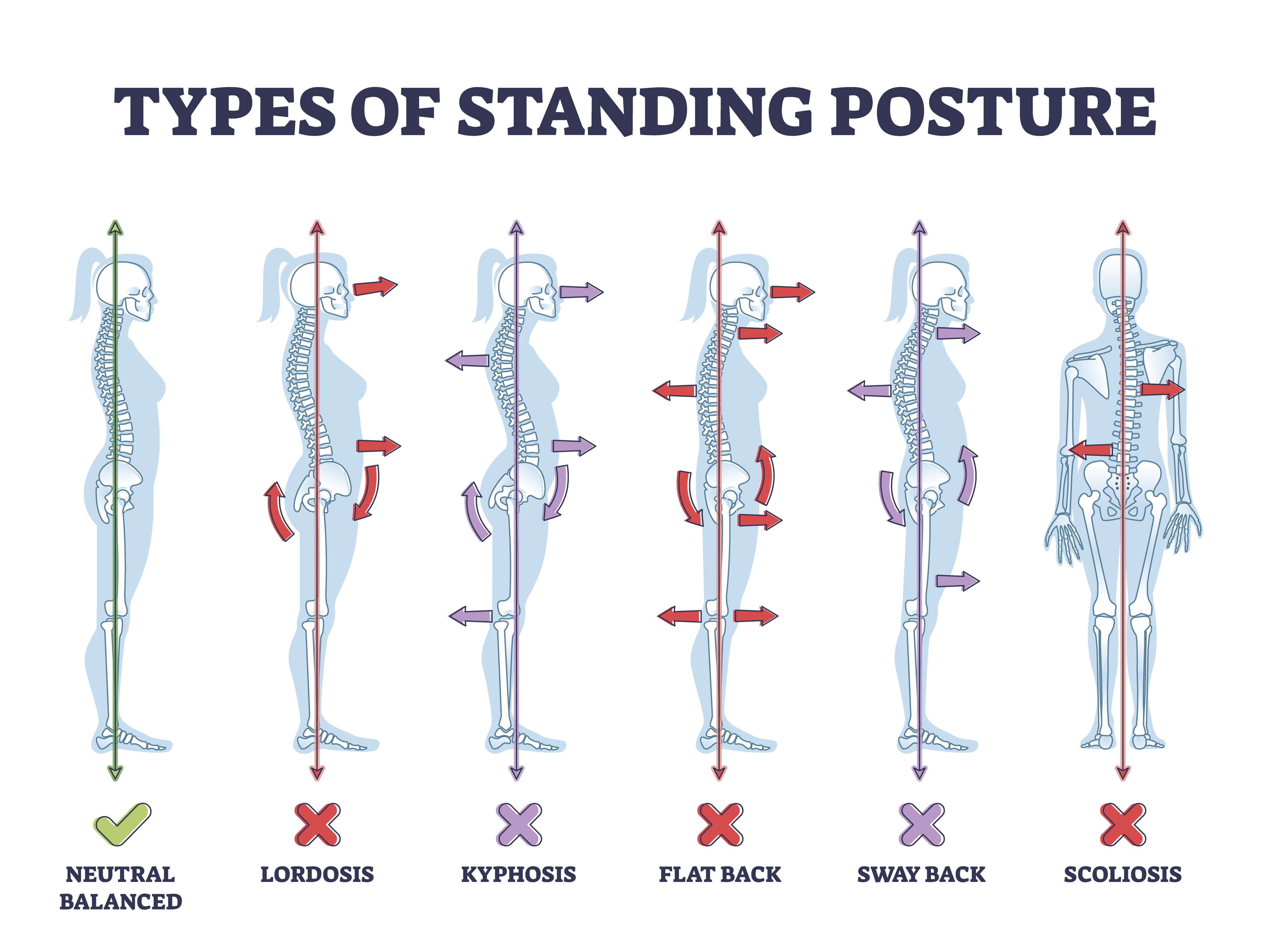
Even if your slouching isn’t this pronounced, hunching over at our desks or hanging our heads down over our phones can lead to sluggish digestive systems, spinal wear and tear, decreased joint and muscle movement, trouble breathing and pain in the lower back, hips, knees and neck.
There are several ways you can straighten up. Try to:
- Be mindful during screen time to avoid “tech neck.” When using your phone or computer, keep your screen at eye level rather than in your lap. Remember, most Americans spend four to six hours on their phones, and that’s a long time to be bent over a device. Maybe that’s why nearly 65% of people who work from home have neck or back pain.
- Sit with confidence by keeping your feet flat on the ground or on a footrest. Whether you’re at your desk or in your favorite living room chair, your knees should be at or below hip level. Your back should be flat against the back of the chair.
- Stand tall while waiting in line or on the sidelines at sporting events. Keep your shoulders back, but relaxed, and make sure your chin is parallel to the ground. If you’re struggling to do that, pretend a string is pulling the top of your head towards the ceiling.
- Use ergonomic furniture, such as chairs with lumbar support, desks with adjustable heights, ergonomic keyboards and footrests. Studies show that these products reduce pain and missed workdays. In fact, ergonomic chairs led to a 30% decrease in lower back pain, while another study reported that an adjustable desk lowered neck, shoulder and back pain by 54%.
- Work out your core muscles with yoga moves like planks and bridges. Researchers found that strengthening core muscles decreased patients’ lower back pain by up to 76%. Even simple stretches can relieve tension and improve your posture.
So, straighten up! Not only will you look more confident with your shoulders back, but you’ll feel better, too.

Find a Doctor
Are you experiencing back, neck, or shoulder pain despite your efforts to maintain good posture? If so, it may be time to talk to your doctor.
Find a Doctor
Back